
Hantavirus Concerns Highlight How Fragile Global Market Sentiment Can Be
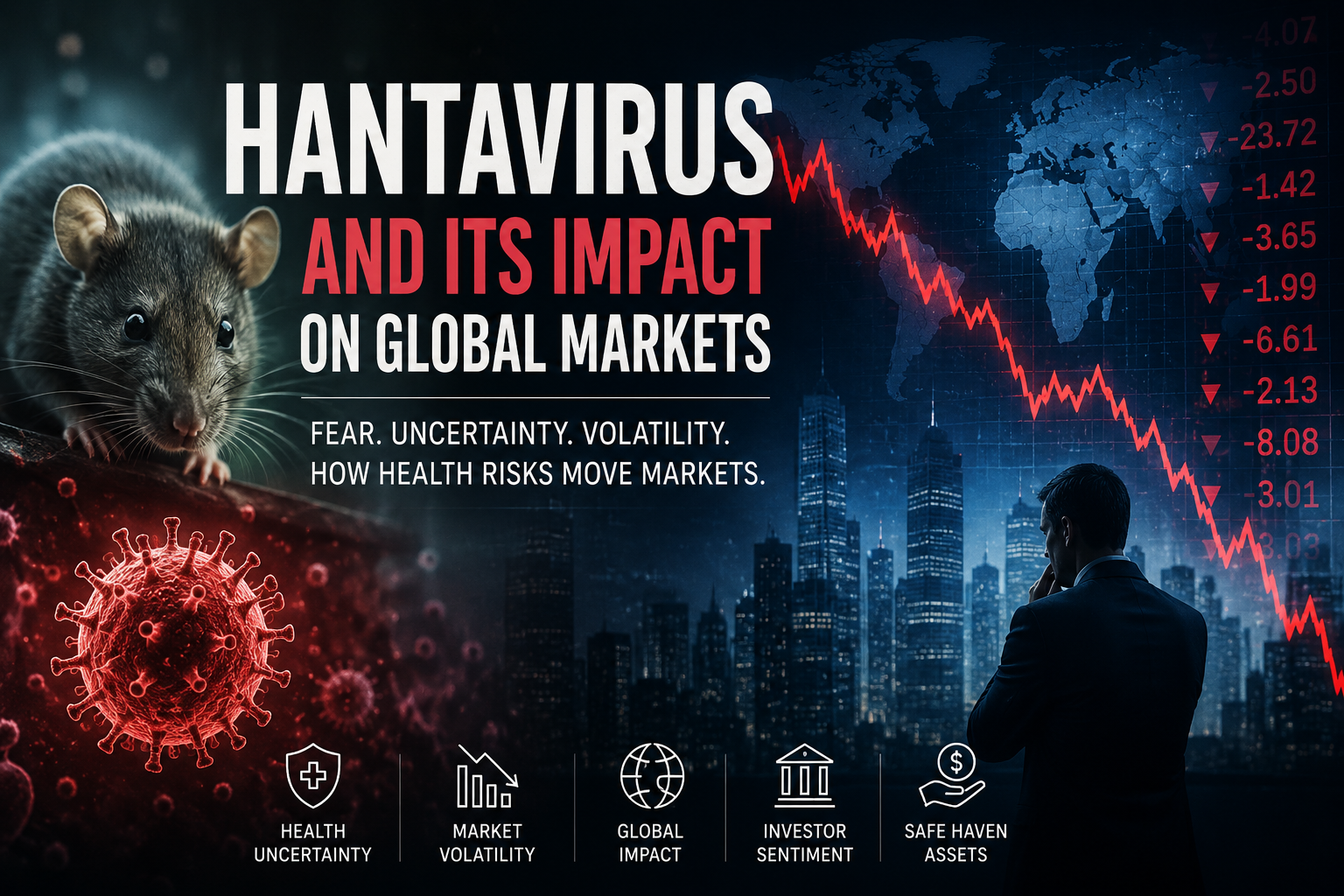
Global financial markets have historically reacted sharply to uncertainty — particularly when health-related risks begin dominating headlines.
Recent online discussions around Hantavirus, though limited in scale compared with major pandemics, have once again drawn attention to how quickly investor sentiment can shift when fears surrounding infectious diseases re-emerge.
While health experts continue to maintain that Hantavirus outbreaks remain relatively contained and fundamentally different from large-scale global pandemics, markets often react less to confirmed realities and more to perceived risk.
That distinction matters.
Markets Price Fear Faster Than Facts
Modern financial markets are deeply interconnected with public psychology. In an era driven by instant information flow, social media amplification, and algorithmic trading, even isolated health concerns can influence investor behavior disproportionately.
The COVID-19 pandemic fundamentally changed how markets interpret outbreak-related news. Since then, investors have become increasingly sensitive to:
public health alerts,
supply chain disruption risks,
mobility restrictions,
and potential economic slowdowns.
As a result, even limited discussions around infectious disease outbreaks can trigger defensive positioning across global asset classes.
Defensive Sectors Typically Gain Attention
Historically, periods of heightened health uncertainty tend to redirect investor capital toward sectors perceived as more resilient or strategically positioned.
Healthcare and pharmaceutical companies often attract attention due to expectations surrounding:
vaccine research,
medical infrastructure,
diagnostics,
and healthcare demand.
At the same time, sectors tied closely to discretionary spending — including travel, hospitality, and aviation — can face temporary pressure if consumer confidence weakens.
Commodity markets may also respond. Gold, traditionally viewed as a safe-haven asset during periods of instability, often experiences increased investor interest when uncertainty rises globally.
The Bigger Risk Is Often Sentiment, Not Fundamentals
One of the most important lessons from previous global crises is that financial volatility is frequently driven by sentiment before fundamentals materially change.
Investors tend to reposition portfolios rapidly when uncertainty emerges, even if long-term economic implications remain unclear.
This creates an environment where:
volatility rises,
risk appetite declines,
and short-term market movements become increasingly emotion-driven.
The speed at which information circulates today further amplifies this effect. Headlines alone can move billions of dollars across markets within hours.
Long-Term Investors Typically Focus on Stability
Despite periodic disruptions, long-term market history suggests that global economies gradually adapt to crises over time.
Pandemics, geopolitical conflicts, financial crises, and macroeconomic shocks have repeatedly tested markets over decades. Yet disciplined investing strategies have historically relied on:
diversification,
long-term asset allocation,
and avoiding emotionally driven decisions during periods of uncertainty.
For long-term investors, short-term panic often creates noise rather than lasting structural change.
A Reminder of How Markets Truly Operate
The renewed attention around Hantavirus serves less as a warning about a specific outbreak and more as a reminder of how sensitive modern financial systems are to uncertainty itself.
Markets today operate not only on earnings, growth, and monetary policy — but increasingly on expectations, perception, and investor psychology.
And in environments shaped by uncertainty, disciplined investing often becomes more important than prediction.
— TOSX Capital